Antisemitism Royal Commission should examine Defence role in homeland security
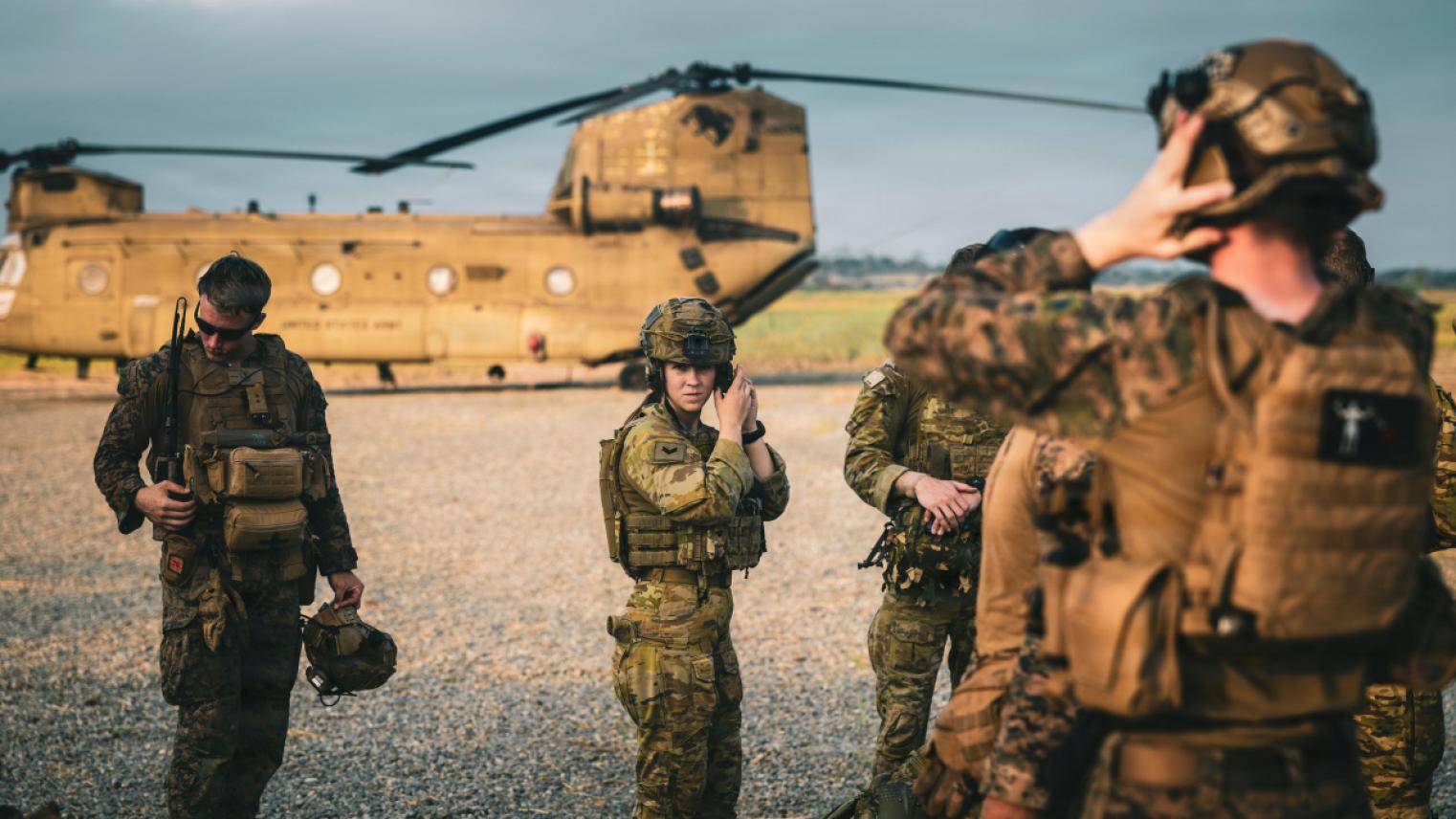
Pfc. Peter Bannister_Defence Imagery
The Royal Commission into Antisemitism and Social Cohesion has a full schedule. But it should examine the role of Defence in community safety and responding to domestic security contingencies.
This is well within the scope of the commission’s terms of reference, which include examining the improvement of protective security for Jewish places of worship, major sites, educational and cultural facilities and public events, and identifying any lessons for “security and law enforcement agencies” (Defence is included in the definition) to prevent and respond to similar attacks in the future.
In the aftermath of the Bondi terror attack, deploying the army to protect the community wasn’t ruled out by NSW Premier Chris Minns. The standard Defence line, however, is that soldiers are trained to defeat enemies, not arrest people or exercise graduated force against citizens. A military presence at key events would risk being seen as political, to make the government look as if it is “doing something”, and we need the ADF to be viewed as apolitical (not least for recruitment). We need our military focused on war fighting, not being diverted into domestic tasks. The ADF is highly regarded by the public and one reason for that, it’s often argued, is that our military doesn’t police Australian citizens. The Defence argument is that the ADF already has enough challenges to contend with, including the international security situation but also cyber war, the advent of drones, and AI.
It’s part of the same debate we hear about using the ADF to respond to natural disasters or the Covid pandemic. While I have every sympathy with the ADF’s focus on building warfighting capabilities, the reality is that the military will always be called on to respond to national crisis events. Instead of resisting that reality, the ADF should rethink how it can position more effectively to deal with government demands for its involvement.
The Bondi attack highlights that Australia must apply all the elements of our national power effectively to meet the continuing counter-terrorism challenge. The most significant legal factor is the Constitution’s assignment of the national defence power to the federal government and the domestic security power to the states. But the law has always allowed the federal government broad discretion in the use of the military in domestic security roles. Despite the increasing capabilities of police tactical units, the states will expect the federal government to make ADF capabilities available in those circumstances.
In Defence doctrine it’s known as Defence Force Aid to the Civil Authority. It’s where the ADF is called out if a potential use of force is envisaged and where containment of a large-area terrorist site may be required.
Ministers and the governor-general need to be satisfied that a threat of “domestic violence” exists impacting commonwealth interests or at the request of a state. But you can still pre-deploy troops to a locality without a formal call-out.
The actual uses of the ADF have been limited and related to international obligations. The army was called out after the Hilton bombing in 1978 to protect visiting Commonwealth Heads of Government travelling to Bowral. The RAAF was called out to protect George W. Bush’s aircraft during his visit in 2003. The ADF can also be used to protect commonwealth assets, such as Pine Gap, which has obvious international connections.
Defence is part of a homeland security “orchestra” with numerous other players. It isn’t the lead agency for counter-terrorism. Defence would argue that it is part of that “orchestra”: it’s the “brass” section and shouldn’t be playing the “strings”.
But the Defence organisation has much to contribute to security at home, including some capabilities that are unique in Australia. These range from counterterrorist assault, bomb disposal, cordon and search, defensive counter-air and maritime protection, aeromedical evacuation, decontamination and intelligence.
Defence is seen by our government as providing the widest range of options in the highest-risk contingencies. Given the desire to maintain public confidence in the government’s handling of national security, this is unlikely to change while the terrorist threat level at “probable” prevails, meaning a “greater than 50 per cent chance of an onshore attack or attack planning in the next 12 months”. That’s a coin flip.
When the Australian people perceive themselves to be under attack, they will demand that governments bend every resource to their protection. Defence will be expected to play its role in a local terrorism crisis.
Defence will need to grapple with a range of issues in its future contribution to domestic security missions. These include health (aeromedical evacuation, medical support, quarantine), special events security, cordon and search in response to specific threats, and critical infrastructure protection.
Premier Chris Minns’s comments weren’t particularly helpful in the sense that there was no precision around what it was he wanted Defence to do. It wasn’t clear if he was focusing on a specific counter-terrorism response, so much as wanting to have personnel in the streets, providing assurance.
However, ADF response capabilities, along with police and the emergency services, should be tested much more in no-warning exercises involving whole-city terrorism. A dedicated strategy for Defence support to domestic security should be developed that would outline the vision for Defence homeland security capabilities and roles and prioritise ADF efforts. The strategy would make it easier for Defence to integrate planning and operational capabilities for homeland security more fully into its processes.
There is a need to rethink the counter-terrorism relationship that exists between the ADF and different police forces. The royal commission should consider how the federal government can effect a national crisis response when necessary. The Lindt Cafe siege over a decade ago showed that the barriers are so high against an ADF counter-terrorism domestic response that it might never happen. The ADF wasn’t called out, so its superior sniper and assault capabilities did not get used.
When the Australian people perceive themselves to be under attack, they will demand that governments bend every resource to their protection. Defence will be expected to play its role in a local terrorism crisis, not just trying to prevent and respond to an attack but helping to restore some degree of normalcy after a major terrorist strike. A Defence failure in a domestic security mission will be highly damaging to its relationship with the Australian people.
Although civil liberty watchdogs have at times raised concerns about the dangers of excessive involvement by our armed forces in domestic security, especially where it involves the use of force, this appears to be an elite debate that does not resonate with the public. There is no evidence, for example, that the public would object to Defence contributing to a permanent protective security presence for Jewish sites, schools and places of worship. In Italy, France and Belgium military personnel are stationed at Jewish sites. Legislative changes to the Defence Act, built around Defence call-out in exceptional circumstances, would be needed for civil deployment of the ADF in any standing protective presence role.
But Australians are reasonably open to the use of Defence in homeland security missions. Public opinion will continue to support further sensible steps by Defence to increase its involvement in domestic security, so we are better prepared to prevent and respond to a Bondi 2.0.
Anthony Bergin is an Expert Associate at the ANU National Security College. This article appeared in The Australian 2 June 2026