Indo-Pacific coast guards sail into expanded role
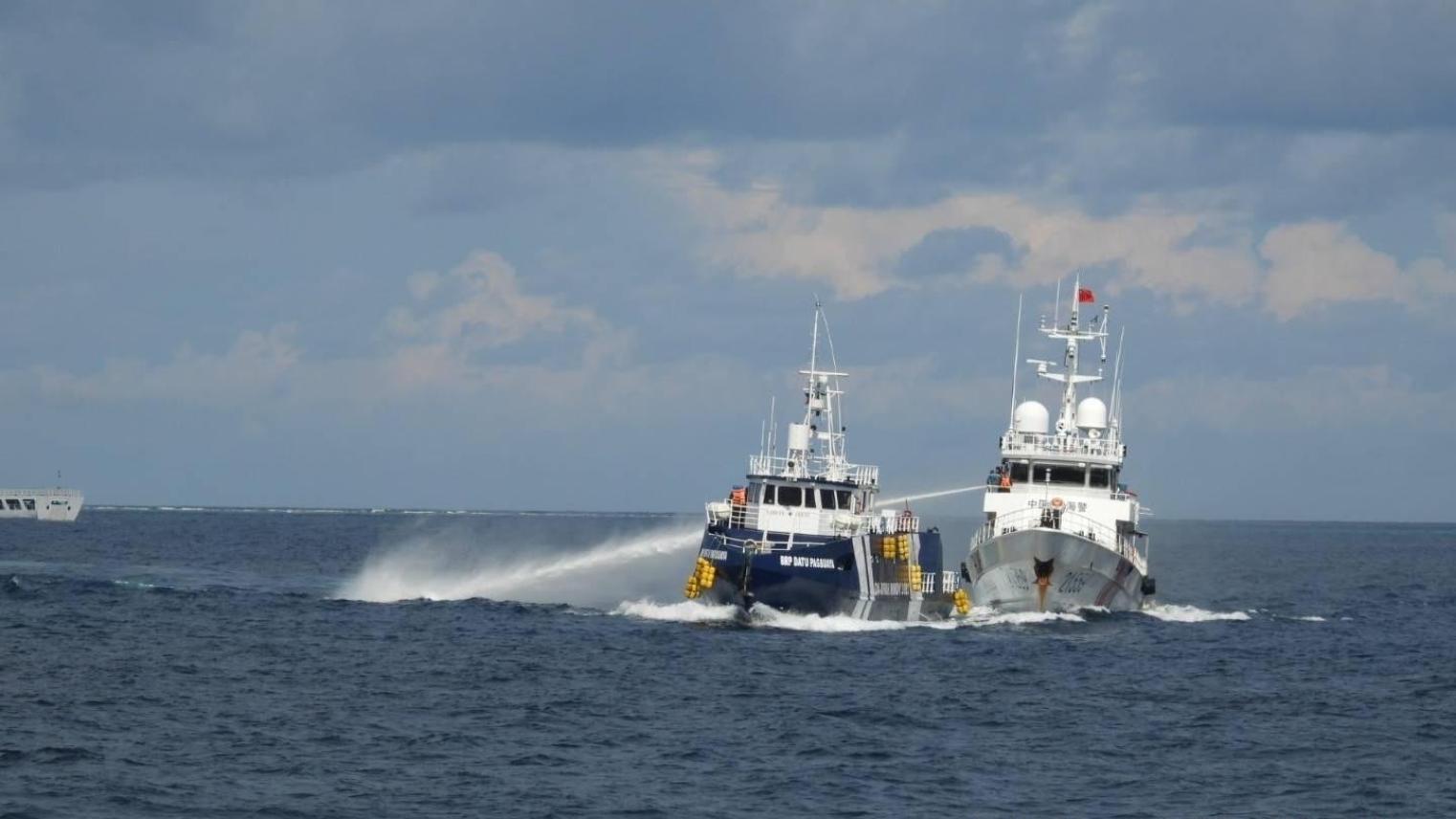
Philippines Coast Guard
Coast guards are now the front line of regional maritime security in the Indo-Pacific.
All around the region they are increasingly becoming the first responders in sovereignty disputes, law enforcement and environmental stewardship. Their wide and growing responsibilities will require significant investment in coast guard capabilities in parallel with increased spending on navies.
Three broad forces will impact on Indo-Pacific coast guard operations over the next decade. The first is changing global dynamics, where competition among the major powers increasingly impacts smaller countries.
Coast guards are now increasingly on the front line of hybrid warfare.
This means that they are now likely to be more involved in military-type activities that have historically been the province of navies. The ambiguity between military and civil activities will increase. Coastguards will require more training for “grey zone” encounters and may require more non-lethal weapons.
Other developments will also add to their workload. The seabed is being an increasingly contested domain, particularly for critical infrastructure such as communications cables, oil and gas pipelines, and power cables. We have seen many recent examples of suspected intentional damage to undersea cables and pipelines around the world. The coast guard’s role in protecting seabed infrastructure will increase when it comes to nefarious acts. This will require coast guards to acquire new capabilities to monitor and protect seabed infrastructure.
There are also security risks to new offshore energy infrastructure, including wind farm turbines, undersea power cables and land-based substations. Coast guards will have an important role in securing these facilities as well as emerging maritime infrastructure such as carbon capture and storage projects utilising former offshore gas fields.
As nations seek to diversify their supply chains for critical minerals, many are turning to seabed mining. Coast guards maybe called upon to monitor mining practices to ensure compliance with international requirements and environmental practices.
They will also play a role in responding to and mitigating any security threats to this emerging underwater industry.
The second broad force shaping future coast guard missions is technological change. This includes the growing use of autonomous systems on large ships and those carrying hazardous cargo. The use of autonomous systems can create significant safety concerns. They are also being used by malign actors to carry payloads of narcotics without human crews, which may be more difficult to detect than surface vessels. Coast guards will need to do more in responding to significant cyber threats: helping the maritime sector identify, detect, protect against, mitigate, respond to, and recover from them. The growing space industry will also affect coast guards, including the use of new offshore launch and recovery platforms by private companies. This may require coast guards to work with the maritime industry to enforce safety zones near maritime launch and re-entry landing sites.
The third broad force comes from the environment.
Coastguards will need to respond to new opportunities and challenges in combating illegal, unreported, and unregulated (IUU) fishing. AI provides new opportunities for coast guards to analyse data.
Coast guards can also use autonomous vessels and aircraft to provide important information sources to identify and target IUU fishing activity. But AI and other emerging technologies can also be used by IUU fishers to find new fish stocks and to evade detection by law enforcement authorities. Climate-fuelled natural disasters can have many consequences, including creating a heavy burden in disaster response. Climate change may also fuel a significant uptick in the international movement of people travelling by sea.
This will create greater demands on coast guards for migration interdictions and dealing with maritime safety incidents. Underwater noise pollution and the protection of marine life is becoming a bigger issue.
Ocean noise can disrupt marine life’s ability to communicate, navigate and find food. Coast guards could be called upon to assist in developing routing strategies that can reduce the acoustic footprint of shipping. They may be called upon to reduce their own vessels’ noise when operating near sensitive marine life. This may also include restrictions on the use of artificial light in certain areas, to protect seabirds.
The growth of “shadow shipping” – often ageing vessels involved primarily in illicit sanctions trade – also creates new challenges. Shadow vessels pose considerable risk to other ships and the marine environment, including by switching off tracking systems used to avoid collisions. Many shadow tankers also engage in illicit and risky ship-to-ship transfers of cargoes mid-ocean without complying with normal safety rules.
Coast guards will also be affected by efforts to decarbonise marine shipping through the adoption of low- and zero-emission vessel propulsion systems. These often involve the use of alternative, and potentially hazardous, fuels such as ammonia, hydrogen, and methanol. Incident response planning and coast guard exercises will need to account for these novel fuels as they emerge.
The decarbonisation of maritime industries may also lead to public demands for “green” coast guards. This could require fresh investments in engine and ship design as well as repair and maintenance.
Not least in terms of the marine environment, by 2050 it’s estimated that the amount of plastic in our oceans will outweigh fish. Coast guards could assist governments in monitoring and highlighting problematic products and hot spots. They could even add trawls to ship hulls for trawling microplastics. They could develop their own code of conduct on the use of plastics to enhance their green credentials. It might include commitment that everything used on vessels is recyclable. They could use their purchasing to avoid certain plastic products.
Indo-Pacific coast guards will face many new challenges and demands in coming years that are likely to place ever greater strains on their resources. Nevertheless, coast guards will still often be better vehicles to counter common problems compared with navies.
With their focus on law enforcement, safety and environment, coast guard vessels can do many things that may be deemed too sensitive for the “grey hulled” navy ships. The growing use of “white hulls” on the front line of regional maritime security will require greater investment and focus on coast guards by all Indo-Pacific countries.
This article first appeared in the the Australian on 16 October 2025.