
Six urgent defence lessons Australia must learn from Israel’s conflict with Iran
Department of Defence
There are numerous references to the lessons of the Ukraine war in the 2026 National Defence Strategy but no discussion of the Middle East, which is equally compelling for strategic analysis. We should not neglect this exercise through irrational political bias for at least six reasons.
First, the initial intelligence failure in relation to the brutal invasion of southern Israel by Hamas on October 7, 2023, shows the need to avoid complacency and trust in systems where your enemy understands what your capability is and can innovate counter-measures.
Second, the ADF should examine how Iran and its proxies scraped the social media and online activity of more than 100,000 IDF members to produce a detailed and comprehensive picture of IDF facilities.
Third, we should study how Israel’s wartime economy pivoted towards sustainable high-intensity conflict, including compensating for the impacts of rapid reserve mobilisation on the workforce and the need for civil defence hardening. If Australia were to be confronted with a conflict at scale, extended endurance measures relating to social and industrial mobilisation must be carefully planned for.
Fourth, we should study lessons around energy and data infrastructure protection. The Gaza and Iran operations exposed vulnerabilities in Israel’s power grid with its heavy reliance on natural gas, a centralised grid and generation, limited emergency fuel storage, and logistical bottlenecks. The Israel Electric Corporation accelerated the deployment of microgrids and distributed solar installations, reducing nationwide blackout risk during missile or cyberattacks.
Israel initiated a surge to establish back-up gas pipelines, expanded LNG import capacity, and more extensive strategic oil and gas reserves to cope with longer-duration operations. Measures have been introduced to ensure better storage capacity for renewable sources such as solar and hydrogen to lessen vulnerability to disruption of centralised gas flows. Australia could be presented with precisely the same problems in a major conflict.
Israel has hardened its telecom and data infrastructure to maintain connectivity even during large-scale missile or cyber strikes, including through redundant fibre and satellite facilities. This has allowed unbroken command and intelligence communications even when there was damage to ground networks. It involved the installation of secure mesh networks enabling local authorities and emergency responders to communicate independently when central systems went down.
Using cyber defence fusion centres Israel could monitor military and civilian domains, integrating AI-based anomaly detection.
Civil digital resilience has been achieved through back-up cellular infrastructure. When antenna fields and power lines were struck, mobile base stations mounted on drones and trucks were rolled out, ensuring public communications during regional outages.
Critical health, finance and security data have been mirrored to domestic and overseas secure clouds for instant redundancy that could be trusted to ensure sovereign data protection. Civil defence training has included digital continuity and teaching citizens how to access official alerts and services via offline-ready apps and alternative networks.
Fifth, we’ve been slow to fully exploit the potential of the tools available to achieve full scope Joint All-Domain Command and Control with AI enhancement. Israel has achieved state-of-the-art deployment of these capabilities to create fully integrated and exploitable surveillance data sets at vast scale, including phone intercepts, drone footage, social networks, and geolocation data. These systems significantly speed up the process of target identification and prioritisation.
The key to ethical management of such systems is “human in the loop” intrusion points.
Israel was able to use this “human-machine teaming” system to help plan, co-ordinate, and synchronise airstrikes in multiple battlespaces simultaneously. This included the detection of missile launchers in Iran, Lebanon, and Yemen and the fusion of radar and sensor data to provide real-time airspace capture, allowing for rapid interception of hostile drones and UAVs.
This has supported missile detection and alert systems for the IDF and civilians regarding incoming fire, which can also forecast impact zones and improve response times thereby helping save lives.
Underpinning all this was the creation of a dedicated AI division within the IDF, consolidating several tech units, and an AI Centre of Excellence to manage AI applications across military and civilian defence systems.
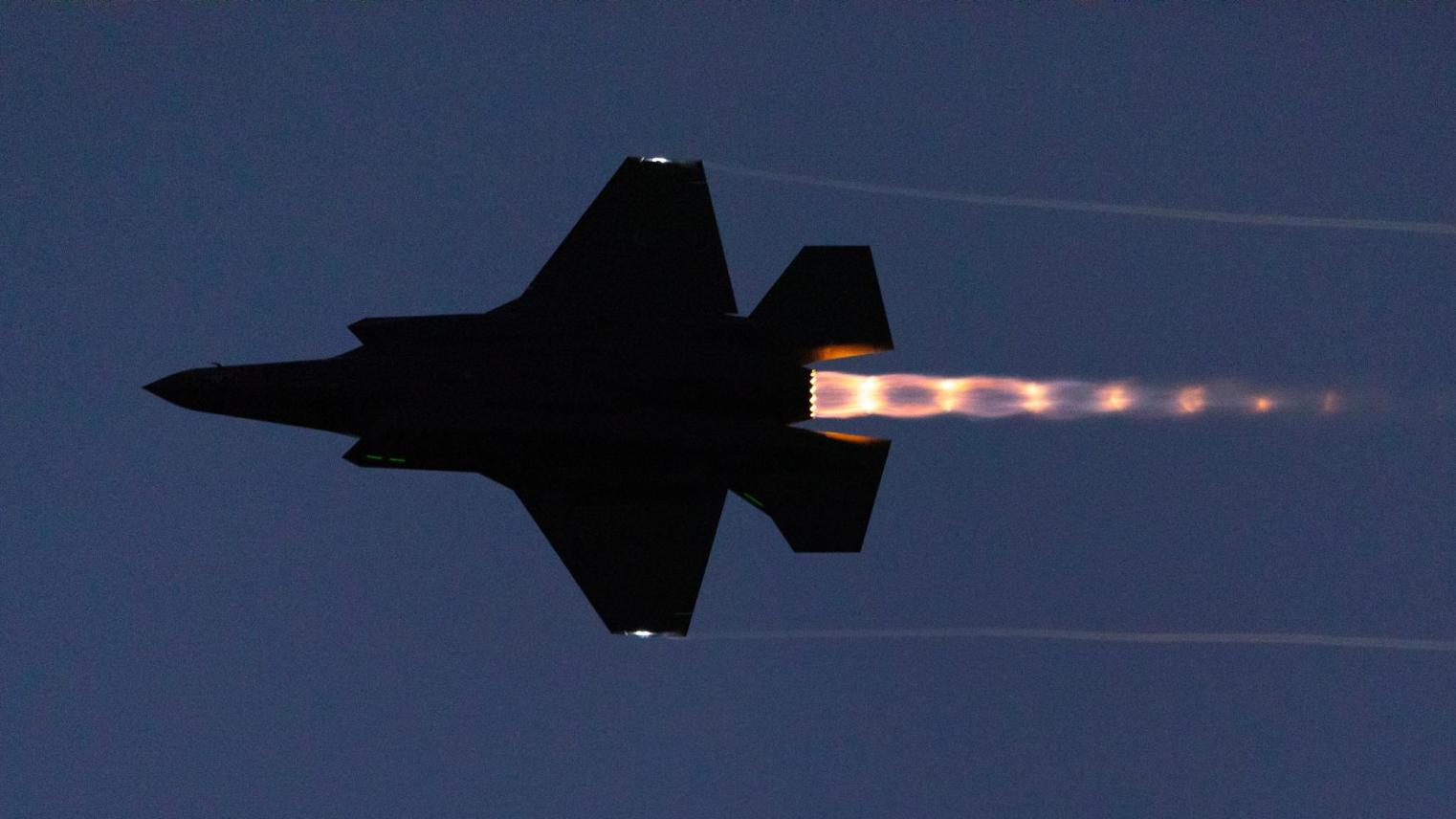
Finally, we should note the way Israel has adapted its fleet of F-35 Lightning II aircraft. Australia and Israel share this platform. But the Israeli version, the F-35I, is vastly superior. Because the US draws such invaluable battlefield data from Israeli experience, it allows the IDF to make many modifications, including to critical software, electronic warfare capability and avionics to its F-35 fleet.
Most critically, the modifications include greatly enhanced range, which is a key consideration for Australia. This has reduced the need for dependence on slow and vulnerable air refuellers.
Israeli engineers modified their F-35s with conformal fuel tanks and added external drop tanks. This enabled Israeli F-35Is to fly over 1700km to strike targets in Iran and Yemen without a single mid-air refuelling. Israeli F-35Is have operated in Iranian airspace that features sophisticated Russian S300 and S400 systems and advanced radar coverage. To meet this challenge, Israel installed its own EW suite designed to counter these systems, which are also operated by China. Israeli F-35Is have conducted strikes in broad daylight and over defended territory with no combat losses or damage due to enemy fire.
US F-35s are currently operating with a 51 per cent readiness rate. Israel achieves a rate of 90 per cent with assets flying five times their normal operational tempo. Israel accomplished this by requesting from the US complete independence in maintenance and upgrades in exchange for their real time battlefield data.
Fortunately, Australia has a F-35 maintenance hub located at RAAF Base Williamtown which is the primary South Pacific regional maintenance, repair, overhaul and upgrade depot for the F-35.
This assists with the supply chain issues that would otherwise have faced us. But there are other aspects to how Israel operates their sustainment and supply regime that we can learn from.
The US permits Israel to modify code and integrate their own systems, which no other F-35 partner nation can do. After every sortie, Israeli engineers download operational data for analysis and update the software immediately, so that the system evolves with each mission.
In the US and Australia, software updates go through the Joint Program Office process and changes can take months to implement. The changes Israel can independently make enables them to network seamlessly with their previous generation platforms that can carry heavier payloads.
They will benefit from the state-of-the-art AI-enhanced situational awareness, Joint All Domain Command and Control (JADC2) and Intelligence, Surveillance and Reconnaissance (ISR) that the F-35I is capable of harnessing for the management of the battle space. It also integrates with ground-based air defence systems, intelligence networks and command centres.
This integration capability would be invaluable for co-ordination amongst potential allied forces and all domain systems across the vastness of the Indo-Pacific. Israeli experience is being used to train US personnel right now. Australia could benefit from seeking to deepen its security engagement with Israel to draw on all the benefits of their operational experience, particularly in utilising like platforms.
The Iran war highlighted an unprecedented level of operational co-ordination between the IDF and the Pentagon. It is in our national interest to develop such a strategic and defence relationship with Israel. This would be a powerful deterrent to aggression in our region and thereby an investment in preventing war.
Mike Kelly is an Adjunct Professor of the National Security Institute at the University of Canberra. Anthony Bergin is an Expert Associate at the ANU National Security College. This article appeared in The Australian 26 May 2026
Related content


26 Jun 2025
The National Security Podcast
Iran, Israel and the future of Middle East security
In this episode, Jessie Moritz and Ian Parmeter join David Andrews in discussion about the unfolding conflicts in the Middle East and their consequences for the future of regional and global security.
18 Mar 2026
The National Security Podcast
What is driving the war in Iran – and what comes next?
In this episode, Beth Sanner and Dr Rodger Shanahan join Justin Burke to discuss the drivers of the Iran war, and examine the broader implications for regional and global security.