Connected & protected: building Australia’s submarine cable resilience

DFAT
About the paper
The seabed is becoming a battlefield ... And we have been slow – collectively slow – to recognise [submarine cables] as the strategic targets they have become.
– The Hon Richard Marles MP, Deputy Prime Minister and Minister for Defence, Australia, Shangri-La Dialogue, Singapore, 30 May 2026.
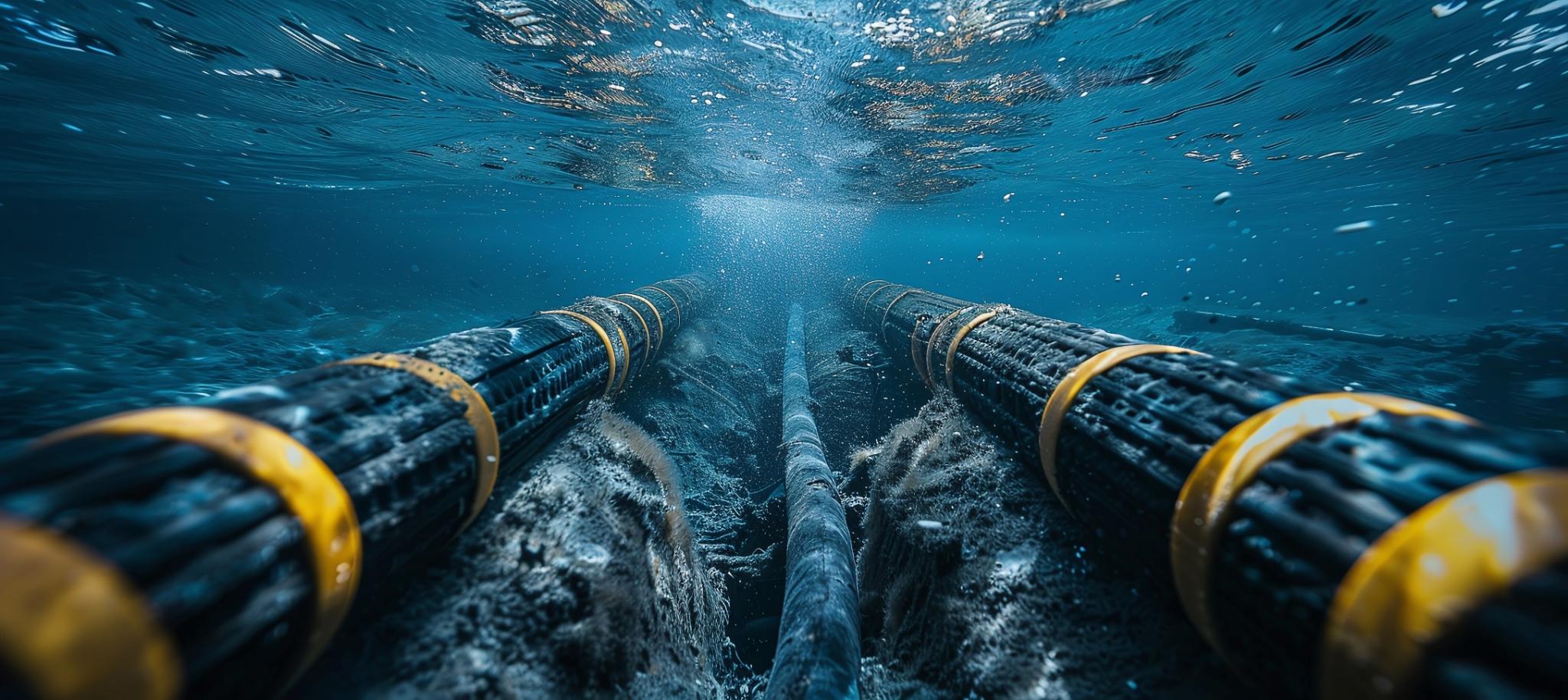
Connected & protected provides a comprehensive assessment of Australia’s submarine cables network. It sets out recommendations to promote our economic interests and secure our submarine cables network from key threats and vulnerabilities. Australia currently depends on some 16 privately operated submarine cables for the vast majority (around 99 per cent) of its international communications and data needs. The smooth functioning of these cables is critical to Australia, as any significant network disruption would likely have widespread adverse consequences for its economy, society, and national security.
The international submarine cable industry is undergoing significant change, driven by a combination of factors. Geopolitical concerns are leading to a bifurcation of the industry between Chinese and non-Chinese players as well as the re-routing of cables outside of sensitive areas. Meanwhile, so-called ‘hyperscaler’ technology companies, including Google and Meta, with massively increased data transmission and processing needs, are driving major new investments.
Together, these are changing the shape of the Indo-Pacific cable network and presage significant new investment in Australia’s cables. These developments are creating a significant opportunity for Australia. Its geography, political stability, and status as a trusted network partner are attracting cable investment that previously transited through what are now increasingly geopolitically sensitive chokepoints.
Australia’s digital resilience and its economic interests are therefore well served by actively positioning itself as an Indo-Pacific preferred cable hub. That requires ensuring our domestic policy settings are conducive to that role.
Submarine cables face growing threats from state and non-state adversaries. As recent incidents in European and Indo-Pacific waters have shown, cables can be disrupted as part of a strategy of hybrid/grey-zone warfare, and Australia’s communications history demonstrates that its cables would be a high-priority target in any major conflict.
But, due to their offshore and underwater location, it is difficult to protect submarine cables from physical attack, including from ships’ anchors, grapnels, and UUVs. Submarine cables are also highly vulnerable to cyber-attack both on land and at sea. Protecting cables from deliberate state-based attack ultimately
requires military as well as civil capabilities – including seabed surveillance, ASW, counter-UUV, mine countermeasures and clearance diving – areas where Australia currently has gaps.
Despite its critical importance to Australia, the security of submarine cables receives little or no mention in Australia’s key strategic documents such as the 2026 National Defence Strategy, the 2022 Civil Maritime Security Strategy, or the 2023-2030 Australian Cyber Security Strategy.
Consistent with this lack of high-level strategic guidance, Australia does not currently have a clear and comprehensive strategy to properly protect its submarine cable network from a range of threats, including from the subsea environment, inadvertent human activities and intentional attack.
Many federal and state government agencies have roles in this policy area, including MBC, the ADF, the Department of Home Affairs, the Department of Infrastructure, Transport, Regional Development, Communications, Sport and the Arts (DITRDCSA), ACMA, DFAT, ASD, and federal and state police. However, while these agencies are improving their cooperation, their respective roles and responsibilities for the protection of Australia’s cables network are often overlapping and not clearly defined. There are currently no clear formal mechanisms for coordination among relevant agencies or binding understandings of which agencies have leading/supporting roles in respect of specific issues.
There is also a significant international element in protecting Australia’s cables network. Submarine cables need to be protected along the entire length. By their nature, international submarine cables connecting Australia will cross numerous areas of national jurisdiction as well as the high seas. This factor makes it imperative for Australia to work with international partners to protect cables.
There are also significant gaps in the international legal regime for the protection of submarine cables, making it very difficult to arrest and prosecute persons who disrupt or attack submarine cables outside Australian jurisdiction.
Sections 1 and 2 of this report establish the strategic and commercial context, examining Australia’s dependence on submarine cables and the significant changes under way in the global cable industry – including the rise of the hyperscalers and the bifurcation of the industry along geopolitical lines. Section 3 provides the technical foundation necessary to understand the threats and vulnerabilities discussed later in the report, explaining how submarine cable systems work and how they relate to maritime jurisdictions. Section 4 examines Australia’s current approach to governance and protection, identifying significant gaps in strategic guidance, legal frameworks, and the allocation of responsibilities among relevant agencies. Section 5 assesses the full range of threats facing submarine cables – environmental, human, and cyber – drawing on recent incidents in European and Indo-Pacific waters to illustrate the evolving threat environment. Sections 6, 7, and 8 turn to responses, examining how Australia can better protect its cables from disruption or attack, ensure timely access to repair capabilities, and work with industry and international partners to build resilience. Section 9 draws these threads together, making the case for a comprehensive national submarine cable strategy and setting out its key elements.
Connected & protected focuses on civilian telecommunications submarine cables. It does not address military seabed networks, which raise distinct operational and classification considerations.
In a deteriorating strategic environment marked by growing maritime instability, the strategic importance of Australia’s submarine cables has never been more apparent – nor the consequences of their disruption more severe.
Yet Australia’s policy, regulatory frameworks, and capabilities have not kept pace with this evolving reality. This report provides a comprehensive assessment of Australia’s submarine cable infrastructure – its strategic importance, the threats it faces, and the gaps in Australia’s current policy, regulatory framework, and response capability. It makes a series of detailed recommendations for addressing these gaps, argues that Australia needs a comprehensive national submarine cable strategy, and sets out the key elements such a strategy should contain. It also identifies the significant economic opportunities that the shifting Indo-Pacific cable landscape presents, and how Australia can position itself to capture them.
Connected & protected was researched and written with funding support from the Australian Department of Defence, under its Strategic Policy Grant Program. All perspectives expressed in this report are those of the authors.
David Brewster
Samuel Bashfield
Jocelinn Kang
Mike Constable
Anthony Bergin
Canberra, Australia
August 2026
1. The problem
1.1 Critical infrastructure: Australia now depends on some 16 privately operated submarine cables for the vast majority of its international communications and data needs. The smooth functioning of this network is critical to Australia’s economy, society and national security. In coming years, Australia will likely grow ever more reliant on this infrastructure (see Section 1).
1.2 Opportunity for Australia to be an Indo-Pacific cables hub: the international submarine cable industry is undergoing significant changes, driven by geopolitical tensions, ‘hyperscaler’ investment, and surging data demand. These developments are redrawing new Indo-Pacific cable routes away from the South China Sea and Malacca Strait, positioning Australia as a preferred alternative hub. This is a significant economic and strategic opportunity, but one that requires the right policy settings to capture the benefit (see Section 2).
1.3 Growing threats to submarine cables: submarine cables are highly vulnerable to a range of human and environmental threats. In recent years, there have been numerous incidents of disruption to cables, at least some of which are suspected to be intentional attacks. Submarine cables are likely to be a high-priority target for an adversary in any conflict (see Section 5.3).
1.4 Lack of strategic guidance: despite their critical strategic importance, the security of submarine cables receives little or no mention in Australia’s key strategic documents such as the 2026 National Defence Strategy or the 2022 Civil Maritime Security Strategy (see Section 4.1).
1.5 Lack of comprehensive strategy: Australia lacks a comprehensive strategy to properly protect and govern its submarine cable networks, to respond to a range of threats, or to take full advantage of economic opportunities. Policy settings that enhance security are also the settings that attract investment (see Section 9).
1.6 Lack of clear allocation of responsibilities among relevant agencies: many federal and state government agencies have roles in governing Australia’s submarine cables. There is no clear governmental statement on the responsibilities of relevant agencies or formal mechanisms for coordination among relevant agencies, either at a policy or operational level (see Section 4).
1.7 Protection from physical and cyber-attack: due to their offshore and underwater location, it is difficult to protect submarine cables from physical attack. Cyber-attacks, especially those targeting the equipment at terrestrial interconnection points, could cause a significant, prolonged outage. Protecting cables from deliberate state-based attack ultimately requires military as well as civil capabilities – including seabed surveillance, anti-submarine warfare (ASW), counter-uncrewed underwater vehicle (UUV), and clearance diving – areas where Australia has significant gaps (see Sections 5 and 6).
1.8 Repair capabilities: foreign private operators are responsible for repairs to all cables connected to Australia. The Australian Government has no way of ensuring swift repair response even in cases of national emergency (see Section 7).
1.9 Need for international cooperation: submarine cables must be protected along their entire length. By their nature, international submarine cables will cross numerous jurisdictions, as well as international jurisdiction (high seas), requiring Australian cooperation with international partners (see Section 8).
1.10 Gaps in the legal regime: there are significant inadequacies in Australia’s legal regime for the protection of submarine cables, including inadequate regulatory authority to mitigate risks as well as significant gaps in the ability of law enforcement authorities to act against persons who disrupt submarine cables inside and outside areas of direct Australian jurisdiction (see Section 4).
2. Recommendations for priority actions
We make the following recommendations for priority actions to mitigate risks and vulnerabilities in Australia’s submarine cables network. Because these recommendations are interrelated, they are not listed here in priority order:
2.1 Update strategic guidance: Australia’s National Defence Strategy, Civil Maritime Security Strategy, Cyber Security Strategy, and the Guide to Australian Maritime Security Arrangements should be updated to provide guidance to the national security community on addressing threats to the country’s submarine cables network.
2.2 Designate Maritime Border Command as lead coordinating agency on physical threats: the Australian Border Force (ABF), and specifically Maritime Border Command (MBC), should be designated as the lead coordinating agency for monitoring and securing Australia’s submarine cable network from physical disruption or attacks within Australia’s Security Forces Authority Area, including terrestrial infrastructure up to cable landing stations. MBC would be supported by the Australian Defence Force (ADF) and other relevant federal and state agencies. To fulfil this function, MBC would need to have access to adequate resourcing and personnel.
2.3 Designate Australian Signals Directorate as lead technical authority on cyber threats: the Australian Signals Directorate (ASD) should be designated as the lead technical authority for cyber threat intelligence, advice and incident response in respect of Australia’s submarine cables network, working directly with cable operators and supported by appropriate agencies.
2.4 Designate an interagency coordination mechanism for cables: the Australian Government should designate the Joint Agencies Maritime Advisory Group (JAMAG) or another committee as the high-level interagency coordination committee with principal responsibility for the coordination of policy and operational responses among relevant agencies in respect of submarine cables. The committee should report regularly to the Secretaries Committee on National Security on threat developments and cable network security.
2.5 Establish industry advisory board and liaisons: the Australian Government should establish an advisory board including Australian cable network operators and other industry stakeholders to work with the interagency coordination committee. Key agencies such as MBC, the ADF, and ASD should also establish and/or maintain direct liaisons with private cable operators.
2.6 Ensure ADF capabilities keep pace with evolving cable threats: the ADF should ensure that capabilities relevant to the protection of submarine cable infrastructure are adequate to the modern threat environment, including seabed surveillance and maritime domain awareness, ASW, counter-UUV capabilities, as well as clearance diving and counter-mine warfare.
2.7 Promote new monitoring and surveillance technologies: The Australian Communications and Media Authority (ACMA) should have the power to mandate that newly-installed cable systems be complemented by monitoring technologies to monitor proximate objects and events, including vessel activities.
2.8 Ensure Network Operations Centres meet Australian jurisdictional and security requirements: operators should be required to locate a primary Network Operations Centre (NOC), or a remote access facility with overall network management capability, within Australia. This would ensure that cable network operations are subject to Australian jurisdictional and security requirements.
2.9 Establish new cable protection zones: ACMA should declare new cable protection zones (CPZs) in the Northern Territory, Queensland, and elsewhere as part of a strategy of diversifying cable landing sites and routes.
2.10 Priority access to repairs: the Australian Government should establish arrangements that would let relevant authorities trigger priority access to repair capabilities in case of national emergency. This would also require timely access to spares.
2.11 Promote the establishment of an Indo-Pacific industry association: the Australian Government should promote the establishment of an Indo-Pacific cable industry association as a forum for regional operators to cooperate in mitigating risks.
2.12 Continue funding DFAT’s Cable Connectivity and Resilience Centre and the Australian Infrastructure Financing Facility for the Pacific: the Australian Government should continue funding for DFAT’s Cable Connectivity and Resilience Centre, and to ensure the Australian Infrastructure Financing Facility for the Pacific (AIFFP) continues supporting submarine cable projects in the Pacific.
2.13 Convene an Indo-Pacific conference on cable security: DFAT’s Cable Connectivity and Resilience Centre should consider convening an international conference with Indo-Pacific partner states and regional cable operators to clarify legal responsibilities, develop common standards, and develop shared responses to threats and incidents.
2.14 Learn from European partners: DFAT should lead a step-up in Australia’s engagement with European partners to exchange views on response protocols, challenges and identify potential areas of policy cooperation.
2.15 Parliamentary inquiry on submarine cables: the security and resilience of Australia’s submarine cable network should be the subject of a parliamentary inquiry. This would examine how to facilitate civil and Defence assets working with industry to strengthen the resilience of Australia’s cable network and consider gaps in legal and regulatory frameworks that might impede the ability for law enforcement, Defence, and security agencies to prevent and respond to any disruptions to Australia’s cables. A public inquiry would be a valuable way of driving significant organisational and legal reform.
3. Recommendations for a comprehensive submarine cable resilience strategy
Australia needs a comprehensive cable resilience strategy that includes the following elements (see Section 9):
3.1 Digital Infrastructure Investment Policy: include policies to actively promote Australia as the Indo-Pacific’s preferred cable hub, recognising that attracting new cable investment directly enhances digital resilience.
3.2 Identify threats and mitigation strategies: identify potential threats and vulnerabilities to Australia’s cables network, major risk scenarios, and potential mitigation strategies.
3.3 Allocate responsibilities among relevant agencies: allocate responsibilities for cable network security among relevant federal and state agencies, including the designation of agencies in leading and supporting roles in respect of specified threats.
3.4 Interagency policy and operational coordination mechanisms: designate JAMAG or another committee as the principal high-level interagency coordination committee among relevant agencies to coordinate policy and operational responses.
3.5 Government-private operator coordination mechanism: the strategy should establish an advisory board including Australian cable network operators and other industry stakeholders that would support the interagency committee as well as informing relevant line agencies.
3.6 Resourcing of responsible agencies: include commitments to adequately resource relevant agencies – particularly MBC and the ADF – to fulfil designated responsibilities.
3.7 Update the legal and security regime: include a commitment to undertake a review of Australia’s legal regime for the protection of submarine cables to ensure that regulatory authorities have adequate powers to require private operators to mitigate threats, and that law enforcement authorities have necessary powers to act against persons or vessels that seek to disrupt Australia’s submarine cable network.
3.8 Enhance physical cable protection and promote monitoring and surveillance capabilities: set out policies for the deployment of physical cable protection measures, enhanced monitoring and surveillance, and the integration of ADF capabilities into cable protection – including seabed surveillance, ASW, counter-UUV, and clearance diving and mine countermeasures.
3.9 Enhancing cable redundancy and geographic and ownership diversity: the strategy should provide a framework for enhancing investment in Australia’s submarine cables network to promote redundancy and geographic diversity, as well as diversity in cable owners and operators. The strategy should consider how to encourage and sustain a viable cohort of Australian-owned operators.
3.10 Ensuring timely access to cable repair capabilities: set out approaches for ensuring timely access to cable repair capabilities (including specialist workforce, equipment, and spares) in cases of national emergency. This may include a mix of sovereign capabilities and stockpiles and arrangements for priority access to private capabilities.
3.11 Ensuring access to satellite connectivity: ensure there is adequate access to satellite communications connectivity as a partial back-up in case of widespread disruption to Australia’s cables network. This would require accountability for funding and clear understandings on traffic prioritisation.
3.12 Mitigating cyber risks: cyber-attack may be one of the greatest threats faced by Australia’s cables network. The strategy should designate ASD as the lead technical authority for cyber threat intelligence, advice and incident response. Moreover, the strategy should require new cables be built secure-by-design and mandate cyber security exercises and vulnerability assessments.
3.13 Regional and international engagement strategies: set out a regional engagement strategy with partners in Southeast Asia, the Pacific and Indian oceans, and a broader international engagement strategy for capability building and coordinated incident response with key partners, underpinned by continued funding for DFAT’s Cable Connectivity and Resilience Centre and the AIFFP.
3.14 Connecting Antarctica: include an Australian Government commitment to developing cable connectivity with Australia’s research stations in Antarctica.
3.15 Related seabed infrastructure: the strategy should address the protection of related seabed infrastructure, including power cables, pipelines and other critical seabed assets.
3.16 Deterrence doctrine: indicate Australia’s approach to deterring potential adversaries from disrupting Australia’s submarine cables network. Effective deterrence requires demonstrated detection and attribution capability, clear response thresholds, and a willingness to impose costs on those who attack Australian infrastructure, which must be developed and exercised in close coordination with allies.
About the authors
Dr David Brewster is a Senior Research Fellow with the ANU National Security College. He is one of Australia’s leading experts on Indian Ocean maritime security and is the author of many books, reports, and papers on that subject.
Dr Samuel Bashfield is Research Fellow at the La Trobe Centre for Global Security, where he studies geopolitics and defence trends. He speaks and publishes on national security and defence issues in leading international disciplinary journals and influential media outlets. His research examines how Australia and its partners respond to global geopolitical developments, new technologies and changing
power distributions, with particular focus on maritime security, digital flows, and Indo-Pacific strategic dynamics. He is the author of Submarine Cables (Cambridge Elements in Indo-Pacific Security, 2026).
Ms Jocelinn Kang is the founder of Nodalys, a boutique technology and national security consultancy that aims to strengthen digital resilience through research, advisory and training. Originally trained as a computer systems and network engineer, she held multiple roles in the Australian Department of Defence and the Department of Foreign Affairs and Trade before joining the Australian Strategic Policy Institute as a technical specialist and program manager, where she shaped government and industry understanding of cyber and technology policy issues.
Mr Mike Constable is a senior executive with 30 years in the submarine cable industry, having held prominent leadership roles in both investment and supplyside sectors. He is founder of Infra-Analytics, a strategic advisory consultancy and serves as Vice Chairman of the UN Joint Task Force on SMART cables. Recognised as an authority in his field, he regularly contributes as a speaker and thought leader on regulatory and geopolitical matters, market trends, submarine cable investment and operations. He holds undergraduate and MBA degrees and completed the Advanced Management Programme at Harvard Business School.
Dr Anthony Bergin is an Expert Associate at the ANU National Security College. He was formerly the Research Director and Deputy Director at the Australian Strategic Policy Institute. He holds a doctorate on the law of the sea. Dr Bergin has been a consultant to a wide range of public- and private-sector clients on matters related to maritime security. In 2022, he co-directed (with David Brewster) a baseline study for DFAT on regional arrangements in marine ecology in the Indo-Pacific. He recently collaborated with Dr Brewster on reports focused on maritime security in Sri Lanka and Bangladesh. He is the author of numerous academic articles and think-tank reports on Indo-Pacific maritime affairs.
About the series
NSC’s Occasional Papers comprise peer-reviewed research and analysis concerning national security issues at the forefront of academic and policy inquiry. They are designed to stimulate public discourse and inform policy solutions. The author thanks the many colleagues consulted for this project but remains solely responsible for the views expressed and any errors contained therein.