
Plunging trust in Washington tests US alliance as Australia navigates rising security threats
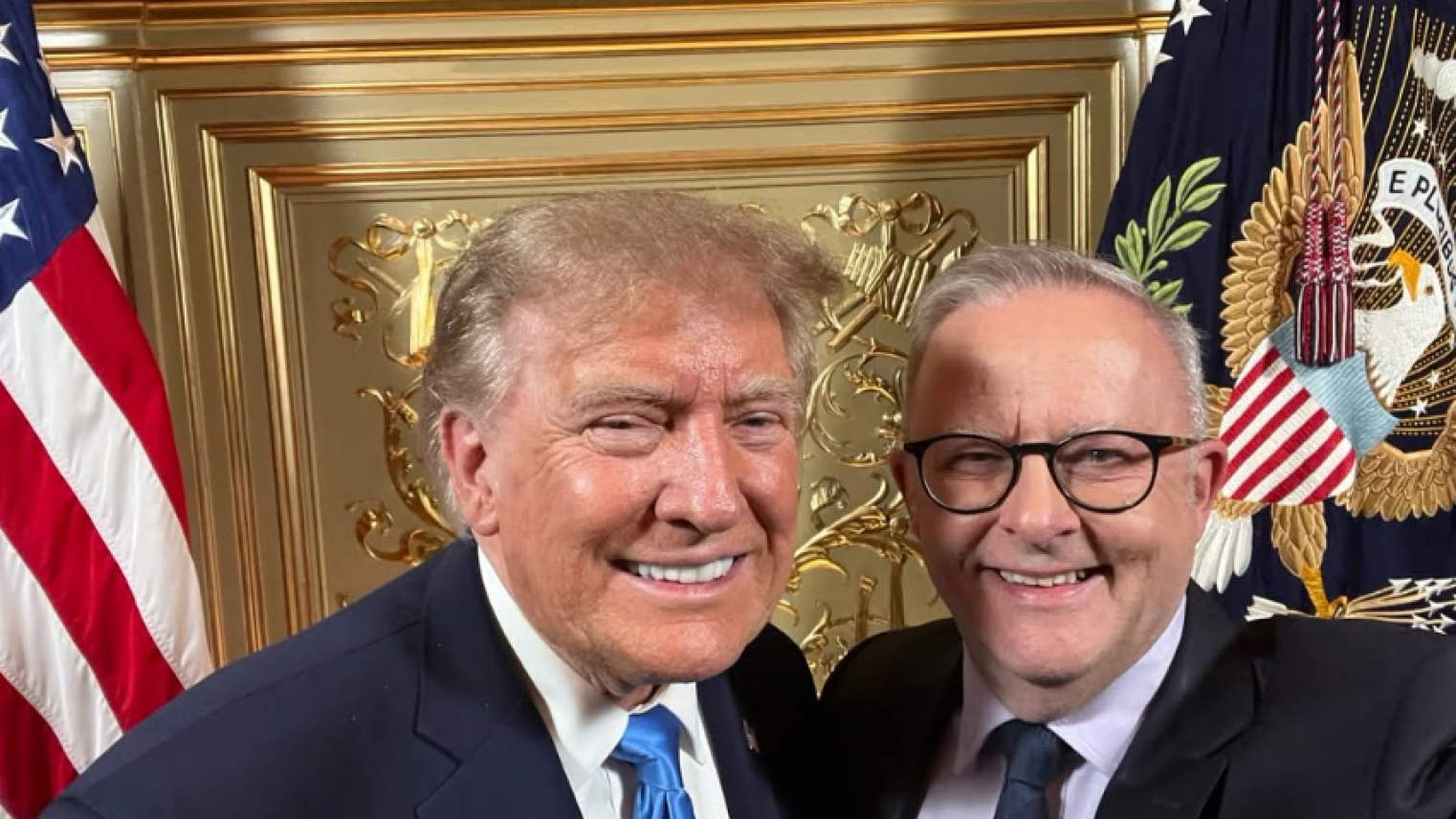
albomp/Instagram
These are difficult times to be a partner of the United States, even one that “has been our closest friend and ally for generations”, as recently arrived US ambassador Dave Brat described Australia in his embassy’s social media on September 25. Just ask Kyiv.
That this year is the 75th anniversary of the ANZUS treaty and the fifth of the AUKUS technology-sharing agreement highlights the contrast between the ambassador’s reassurance and the negative consequences of his administration’s policies for Australian economic and security interests.
Although confronting in its studied bluntness, there is nothing surprising about the Trump administration’s prioritisation of what it considers US national interests over those of even its closest allies. However, while an acutely transactional approach may work in business, it is ill-suited to managing the complex interplay of global interests the US inescapably shares with others.
Washington understandably wants to reduce the uneven burden it has borne as the global security guarantor since World War II, but its actions have eroded allies’ trust, which has been built over decades and cannot be rekindled at a finger’s snap in a crisis. A betrayed Kyiv rightfully is appalled. Moscow, Beijing, Tehran and Pyongyang are delighted.
As a retired US military officer who had served in a senior civilian role in the first Trump administration told me recently: “How can we kiss up to adversaries and shit all over allies and partners, when the United States cannot achieve its objectives on its own?”
Congenital critics of the US alliance fail to offer practicable and affordable alternatives that acknowledge the constraints of Australia’s modest population, its comparatively small military and its stunted manufacturing base. They also downplay successive governments’ investment in broadening and deepening our security, economic and political relations with Japan, South Korea, India, the Philippines, Indonesia, Papua New Guinea and our Pacific neighbours. This growing latticework of bilateral and multiple partnerships leavens collective dependency upon the US-centric hub and spokes security model, to both our and America’s benefit.
Particularly welcome has been Australia’s rejuvenation of relations with Europe, evidenced by the recent conclusion of a free trade agreement, and a security and defence partnership. Apart from exemplifying accountable government and the rule of law, European countries – especially the Nordic Baltic Eight – have much to offer and gain through comparing our respective experiences dealing with authoritarian governments that do not share our strategic outlook.
As Prime Minister Anthony Albanese observed in New York last month, the US remains indispensable but it is no longer sufficient. This plain truth should dispel any lingering “100 years of mateship” sentiment, which dulls objective understanding of the mutually beneficial partnership we have built since 1942.
A problem is that Australian governments have shied from sober public discourse about the financial and other costs of bolstering national resilience to face our hard strategic realities. Public concern about the adequacy and integrity of information about security threats was a clear theme in the ANU National Security College’s No worries? report in March on community attitudes to national security, risk, and resilience.
This complicates the task of explaining the fundamental convergence of Australian and US strategic security interests, which is equally important on both sides of the Pacific if governments are to maintain social licence at home and secure the understanding and support of regional partners upon whom we will call in any crisis.
Washington should be perturbed – and honestly self-reflective – that this year’s Lowy opinion poll shows Australians’ trust in the US to act responsibly in the world has fallen over the past year from 36 to 31 per cent while trust in China has risen from 20 to 28 per cent.
We need a unity ticket on the core security and defence capability challenges we confront ... it would be a powerful signal to allies and adversaries alike.
Claims that the growing US military presence through expanded force posture initiatives will make Australia a target in a future war deny the reality that we have been for decades already. They also overlook the increased reliance that the US therefore has upon us and its concomitant self-interest in supporting and helping defend its vital interests here. Achieving that level of deterrence independent of the US would consume a far greater percentage of our GDP.
Australia’s national security is based on acquiring proportionate military capability in combination and in company. Apart from the deep trust between militaries gained over 75 years, the alliance delivers a cost-effective means of generating world-class capacity that would be commercially prohibitive for the 60,000-strong Australian Defence Force. The development costs alone of the F-35 Joint Strike Fighter, 72 of which are in service with the RAAF, exceed Australia’s annual defence budget. Moreover, as a trusted ally, Australia has access to the highest-end technologies that the US shares with few, if any, other countries, like the EA-18 Growler electronic warfare aircraft and submarine nuclear propulsion.
But the Alliance is not a one-way transfer of security benefits. The value we add extends far beyond strategic geography alone and encompasses ideas, talent, industrial capacity, science and research innovation and operational insight that increase the effectiveness and endurance of the broader allied system.
We provide trusted environments for testing, experimentation and rapid capability development with allies, helping translate innovation into military capability and advantage more quickly, across autonomous systems, long-range strike, cyber and quantum technologies and undersea warfare.
Recent collaborative achievements include the successful integration of the MQ-28 Ghost Bat with the E-7A Wedgetail and the live firing of an AIM-120 missile during testing involving the US Navy, the US Air Force, the Air Force Research Laboratory and industry partners. Maritime Big Play experimentation has brought together AUKUS partners to test advanced autonomous capabilities, including Australia’s Ghost Shark and Speartooth systems.
These activities demonstrate how Australia increasingly is a co-developer rather than simply a customer of military capability.
Our contributions extend beyond the US to the Five Eyes S&T partnership, through which we can draw on the heft of S&T organisations in the other four nations, thus vastly expanding our own base of just over 2000 dedicated scientists and technologists.
This strengthens collective resilience at a time when strategic competition is placing unprecedented pressure on defence industrial bases around the world, including in the US. It would be impracticable, financially prohibitive, and self-damaging to withdraw from this ecosystem. Moreover, the reverse dependency this creates means the US has a vested interest in not putting at risk enduring public support for the alliance.
The alliance increases the options available to government while preserving our sovereign choice in whether, where and under what rules of engagement Australia might participate in coalition operations. Moreover, it enhances regional perceptions of Australia as a capable security partner. In late 2022, I asked a retired Indonesian air vice marshal how he thought the region perceived AUKUS one year on.
He said: “We do not fear a strong Australia, but we would be concerned about a weak Australia.”
Effective deterrence rests on credibility, which in turn requires coherence, commitment, capability and communication.
It is past time to set aside “gotcha” politics in the matter of Australia’s defence and national security. Both major parties agree fundamentally on the strategic analysis of the challenges we face. Both know from experience in government that defence procurement spans multiple parliaments and budgets.
We need a unity ticket on the core security and defence capability challenges we confront. This would give industry, investors, and our education system greater confidence to commit for the long term. And it would be a powerful signal to allies and adversaries alike.
This article first appeared in The Australian 29 October 2026.

Attachments
Related content


Adobe stock
17 Sep 2026
The National Security Podcast
Iran, Ukraine and the limits of American power: geopolitical update part 1
In this episode, Sharryn Parker is joined by Charles Edel, Dilnoza Ubaydullaeva and Euan Graham to discuss the wars in Iran and Ukraine – and what they are revealing about the United States’ capacity, weapons stockpiles, and the changing character of warfare.