
Review of the exposure draft legislation: Combatting Antisemitism, Hate and Extremism Bill 2026
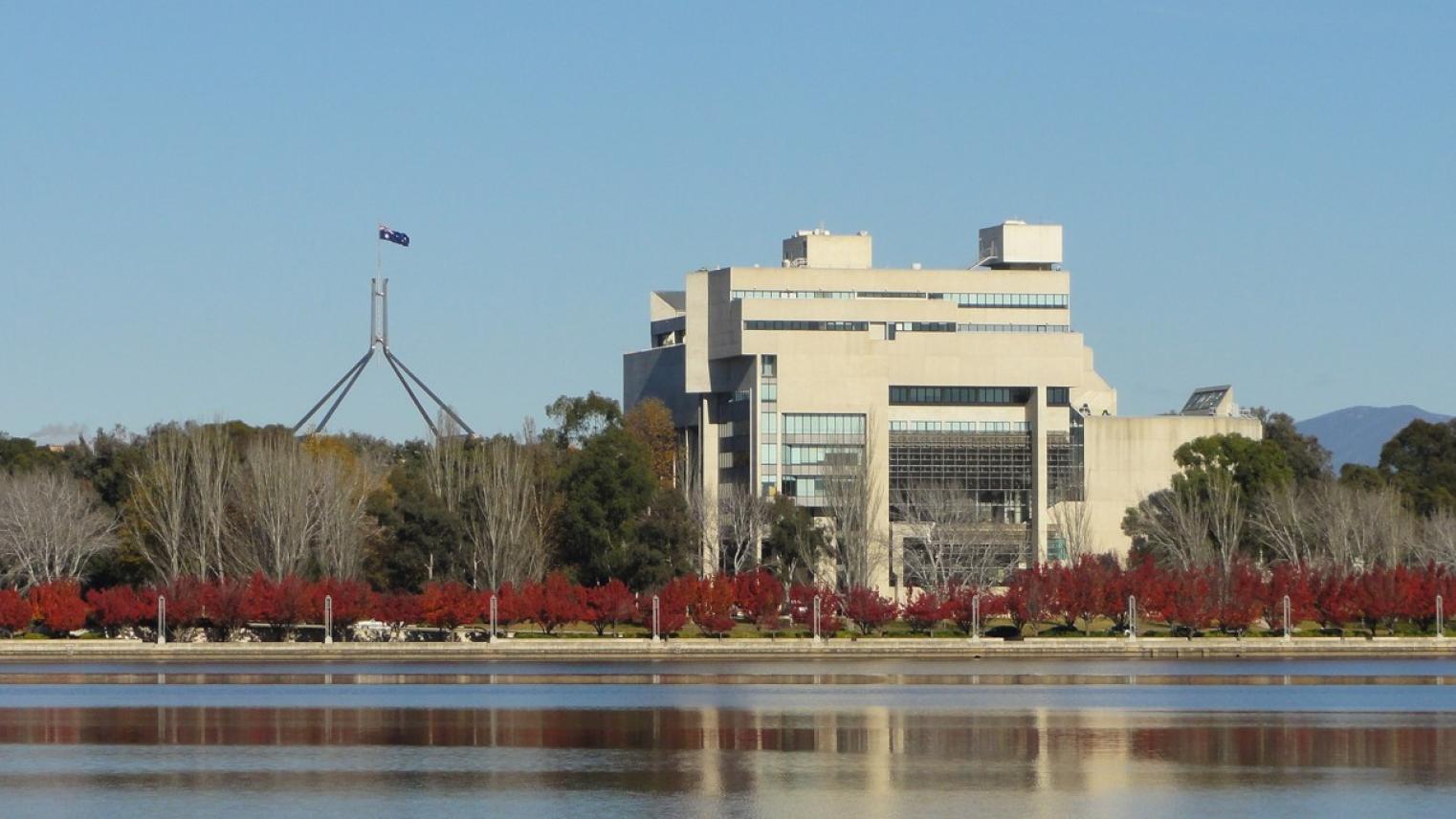
Con Tassios, Wikipedia
Associate Professor Danielle Ireland-Piper's submission to the Parliamentary Joint Committee on Intelligence and Security's inquiry on the Combatting Antisemitism, Hate and Extremism Bill 2026.
Thank you for the opportunity to provide comment by way of a submission on this exposure draft: Combatting Antisemitism, Hate and Extremism Bill 2026 (the CAHE bill). Our collective hearts broke on 14 December 2025, and the government is to be commended for taking quick action on the essential goal of combating antisemitism and other hate crimes.
In February 2025, the Australian Security Intelligence Organisation (ASIO) Director-General Mike Burgess gave his annual threat assessment. He noted a “polarised, grievance-rich environment” in which “social cohesion will remain strained and we can expect spikes in communal violence”. In the year after the October 7 Hamas attacks on Israel, the Executive Council of Australian Jewry reported a 316% increase in the number of reported antisemitic incidents in Australia compared with the same period in the previous year. The Islamophobia Register Australia recorded a surge of more than 530% in Islamophobic incidents being reported between October 2023 and July 2025. Further, a 2024 report on social cohesion showed negative attitudes towards Muslims remain by far the highest of any single faith group for more than ten years. Separately, there are reports of a rise in the number of racist incidents targeting Aboriginal and Torres Strait Islander children and young people. This unrest threatens both the safety of individuals and the stability of our entire society. It increases our vulnerability to external threats, including foreign interference, as well as internal radicalisation. Of course, this does not mean that legitimate concerns about global and regional conflicts and breaches of international humanitarian law in the context of armed conflict should not be able to be raised.
Summary
In short, I support the bill (particularly the firearms amendments). However, I do have concerns about aspects of the bill that may undermine our representative democracy and may provoke rather than pacify religious and racial tension.
While freedom of expression is not an unlimited right and must give way to the rights of others to be safe and free from persecution and hate, it is still an important foundation of any democracy. In short, my recommendations are:
- remove the non-application of procedural fairness in s114A.4.
- to remove mere membership as a criminal offence in s14B.2.
- to narrow the definition of hate crime in the proposed s80.2BF (the test in s80.2BF(1)(c) should be a reasonable person with knowledge and understanding of the group, and not a reasonable person within the relevant group and the construction of the s80.2BF(1)(c) should not be a strict liability offence); and to
- to set out the hate offences offence amendments and migration amendments into a separate bill from the firearms amendments to allow for appropriate review and discussion of two very different types of legal issues.
My reasons and further details are set out below.
Concerns with the CAHE bill
Overall, I support the CAHE bill, subject to some concerns. It is to be commended for, among other things: creating aggravated offences where a person is a religious leader; s114A.8 requiring de-listing of prohibited organisations in certain circumstances; the AFP Minister being required to engage with the Attorney-General and Leader of the Opposition before the Governor-General makes a prohibited hate group regulation specifying an organisation; and the provision for review by the Parliamentary Joint Committee on Intelligence and Security. The firearms amendments are welcome, and the expanded visa cancellation powers are relatively uncontroversial.
However, the draft legislation raises a number of problems for a representative democracy. Given the limited time to review and provide comment, I outline these only briefly below. I am happy to provide further comment on request. My views are my own and do not represent the views of my employer.
- Under s114A.4 of the CAHE bill, the AFP Minister is not required to observe an requirements of procedural fairness in deciding whether or not the AFP Minister is satisfied for the purpose of regulations specifying prohibited hate groups may lead to factual errors and errors of identity. This has the potential to further damage social cohesion and trust in government institutions.
- Criminalising mere membership of an organisation, as the CAHE bill does in s14B.2, without the requirement for any other unlawful act, even in a participatory or inchoate sense, is problematic. This may render this legislation outside the scope of the relevant heads of power, as was the case in the Australian Communist Party v Commonwealth (1951) 83 CLR 1 (where a law that prescribed mere membership of the Australian Communist Party as an offence was found outside the defence power in section 51(vi)). By way of further example, the High Court of Australia has held the external affairs power in section 51(xxix) can only be used to implement treaty obligations where the implementation is consistent with the purpose and intention of the treaty (see, Victoria v Commonwealth (1996) 187 CLR 416, for example). Therefore, a law that contradicts a human rights protection cannot be supported by a human rights treaty, for example. The CAHE Bill is to be commended, however, for requiring the membership be undertaken knowingly, rather than inadvertently. The CAHE bill is also to be commended for providing that the offence of membership does not apply if the person proves that the person took all reasonable steps to cease to be a member of the organisation as soon as practicable after the person knew that the organisation was a prohibited hate group, without any other criminal activity.
- The public conflation of Judaism with Israel and Islam with Hamas and ISIS means the broad scope of the proposed hate offences risks criminalising genuine and reasonable debate on human rights and international relations. This is so in ways that may disproportionality burden the implied freedom of political communication in the Australian Constitution. This undermines Australian democracy and has the potential to create further division and fuel antisemitism. This is particularly so given the proposed amendment of the reasonable person to test to be if a “reasonable person who is a member of a group of persons distinguished by race (a targeted group) would consider that involves dissemination of ideas of superiority over or hatred of a person who is a member of the targeted group, or the members of the targeted group, because of the race, colour or national or ethnic origin of the targeted group; or could incite another person or a group of persons to offend, insult, humiliate or intimidate:) a person who is a member of the targeted group; (ii) the members of the targeted group”. This definition may risk capturing reasonable debate on foreign policy and human rights, including in relation to the Israel/Palestine conflict.
For example, the proposed s80.2BF offence of ‘Publicly promoting or inciting racial hatred etc’ is reasonable in that it requires intent, and is limited to public places. However, arguably, the offence also captures conduct where the ‘conduct would, in all the circumstances, cause a reasonable person who is the target, or a member of the target group, to be intimidated, to fear harassment or violence, or to fear for their safety’.
This test may unwittingly capture reasonable public debate on matters of legitimate public interest and foreign policy, such as for example, the legitimacy of Israeli settlements in the West Bank. It is true that some anti-Israel speech is antisemetic (for example, speech that refers to an “illegitimate Jewish state” may be reasonably be argued to be antisemetic). However, some members of the community have described mere wearing of the ‘Khefiyeh’ as antisemetic, which is fundamentally misconstrued. Instead, the test should be a reasonable person with knowledge and understanding of the group, and not a reasonable person within the relevant group. It is also not clear why this would need to be a strict liability offence.
Social cohesion as a national security issue
As recognised by ASIO, hate crimes are a national security issue. However, the term ‘social cohesion’ is considered by some to be problematic because it implies homogeneity and potentially autocracy. The term ‘social solidarity’ more accurately describes the notion of standing united in diversity and with respect for one another.
This is not an issue that should be misused by political parties to fuel anti-immigration sentiment
Migrants were among the heroes and the victims of the Bondi Massacre in December 2025, and one of the perpetrators was born here. This is not an issue that should be mis-used by political parties to fuel anti-immigration sentiment.
Finally, these views are my own and do not reflect any formal position of my employer.
Sincerely,
Danielle Ireland-Piper


