
Message from the Deputy Head of College: July 2026

Jed Buchanan/NSC
By James Pitman
July has been a month of significant engagement, timely reflection and practical action at the ANU National Security College, as we continue our mission of connecting policy, practice and scholarship to strengthen Australia's national security community.
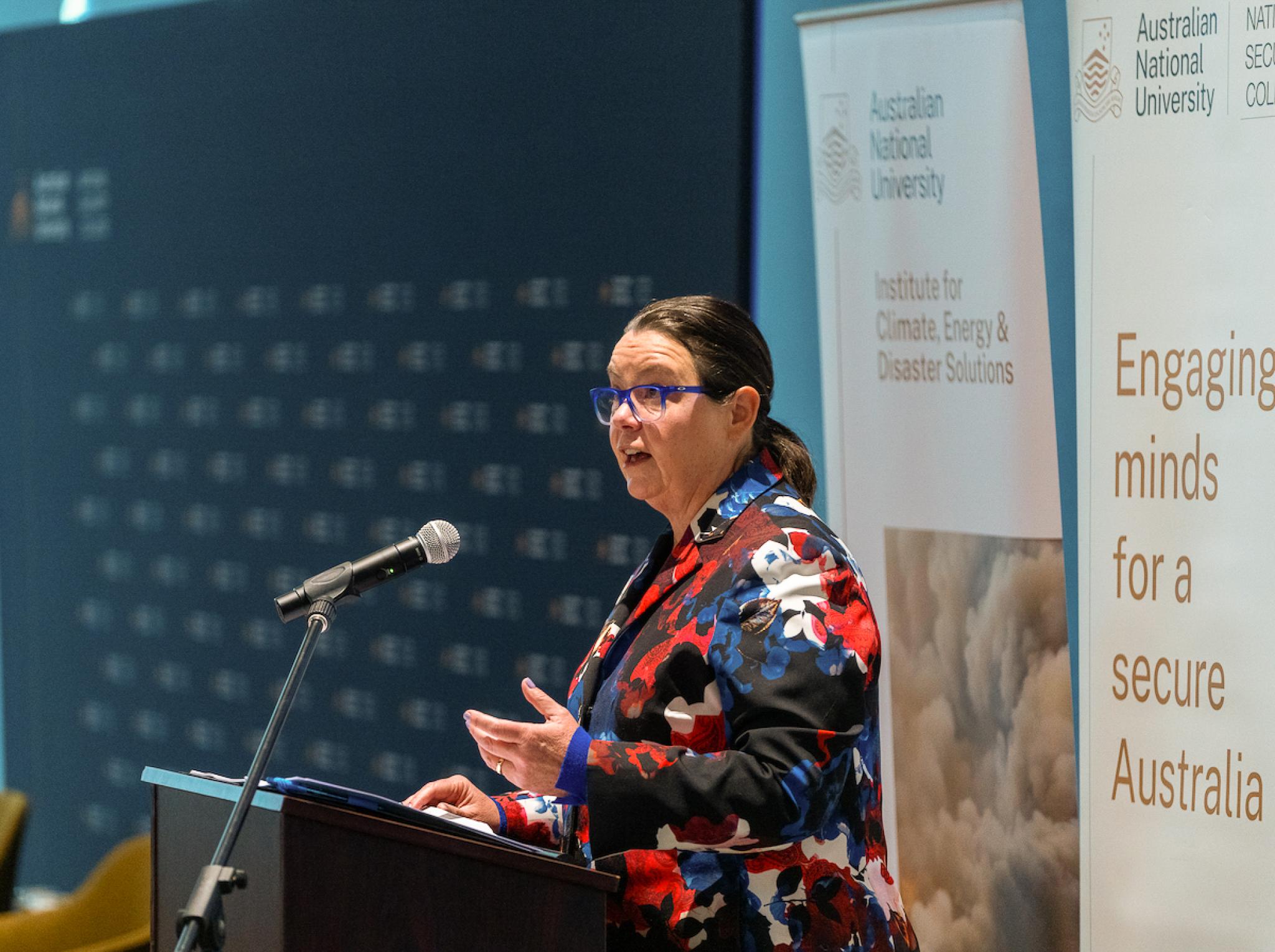
This month, we were pleased to host the Hon Madeleine King MP, Minister for Resources and Northern Australia, for a major address examining the strategic and economic security dimensions of Australia's critical minerals future. At a time when economic coercion, supply chain vulnerability and geopolitical competition are becoming increasingly intertwined, this discussion underscored the status of critical minerals as a strategic asset, requiring careful stewardship as we navigate a more contested international environment.
Across all our activities, NSC continues to serve as a bridge between disciplines, sectors and institutions.
Today's most pressing security challenges rarely fit neatly within traditional boundaries. Issues such as economic security, technological competition, cyber resilience and foreign interference require integrated responses drawing upon expertise from government, industry and academia.
This philosophy informed the launch of our new AI beyond the hype and Economic security programs – designed to support policy advisers and decision-makers as they grapple with the opportunities and risks associated with rapid technological change.
This month, we continued our close engagement with New Zealand through a wide-ranging discussion with the Chief of the New Zealand Army and the Director of the National Assessments Bureau – demonstrating the role NSC can play in fostering informed and constructive dialogue across our closest security partnerships. More recently, we were privileged to convene – in association with AEC Commissioner Jeff Pope – a delegation from the Royal United Services Institute's (RUSI) Centre for Finance and Security to explore the evolving risks within financial systems and their implications for democratic resilience.
Our democratic institutions like the AEC, and our processes like our mandatory electoral system, reinforce the value of these functions as a national asset in our democratic resilience.
July also marked the beginning of a new academic semester at ANU. It was my pleasure to welcome a new cohort of students to our academic programs and to see enrolments reach some of the strongest levels in the College's history, with more than 535 students studying national security through NSC this semester – an encouraging indicator of growing interest in national security among the next generation of Australian leaders.
Alongside our academic teaching, our executive and professional development programs on counterterrorism and violent extremism, critical infrastructure resilience, and nuclear submarines continue to support practitioners working at the forefront of Australia's security challenges. They remain central to our commitment to developing a more capable, connected and informed national security workforce.
Looking ahead, the coming months will offer important opportunities for reflection. The twenty-fifth anniversary of the September 11 terrorist attacks will prompt consideration of how the global security environment has evolved over a quarter of a century and what lessons remain relevant today. For Australia, this reflection comes at a time when the tragic events at Bondi and other recent incidents remind us that terrorism, violent extremism and societal vulnerabilities remain enduring challenges. While the nature of the threat continues to evolve, the work of our intelligence, law enforcement, defence and security agencies has never been more important. NSC remains committed to supporting that mission through education, research, convening and informed public dialogue. We look forward to contributing to these conversations.
Attachments
Related content


09 Jul 2026
The National Security Podcast
NZ Chief of Army on Plan ANZAC and the future of land power
In this episode, Sharryn Parker is joined by Major General Rose King, Chief of the NZ Army, to discuss how NZ land forces undertakes its role in regional security and what closer cooperation with Australia looks like in practice.